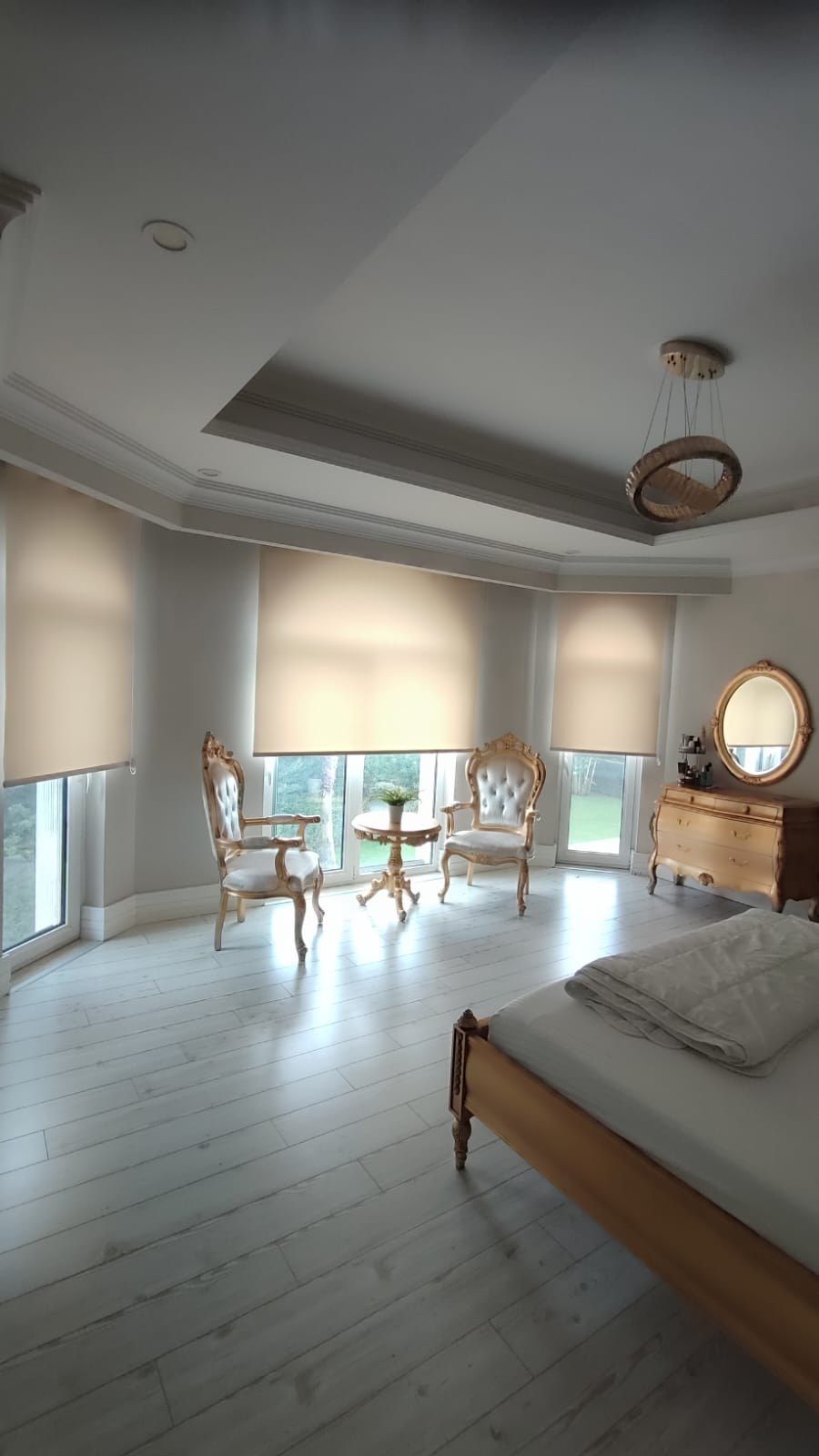
Simple, tidy and practical
A roller blind is one piece of fabric wound onto a tube at the top of the window. Raised, it leaves only a slim roll; lowered, it covers the glass as a flat, smooth panel. With no folds, pleats or curtain track, it is a good choice for small rooms and for windows with furniture placed close in front of them.
The fabric makes the difference
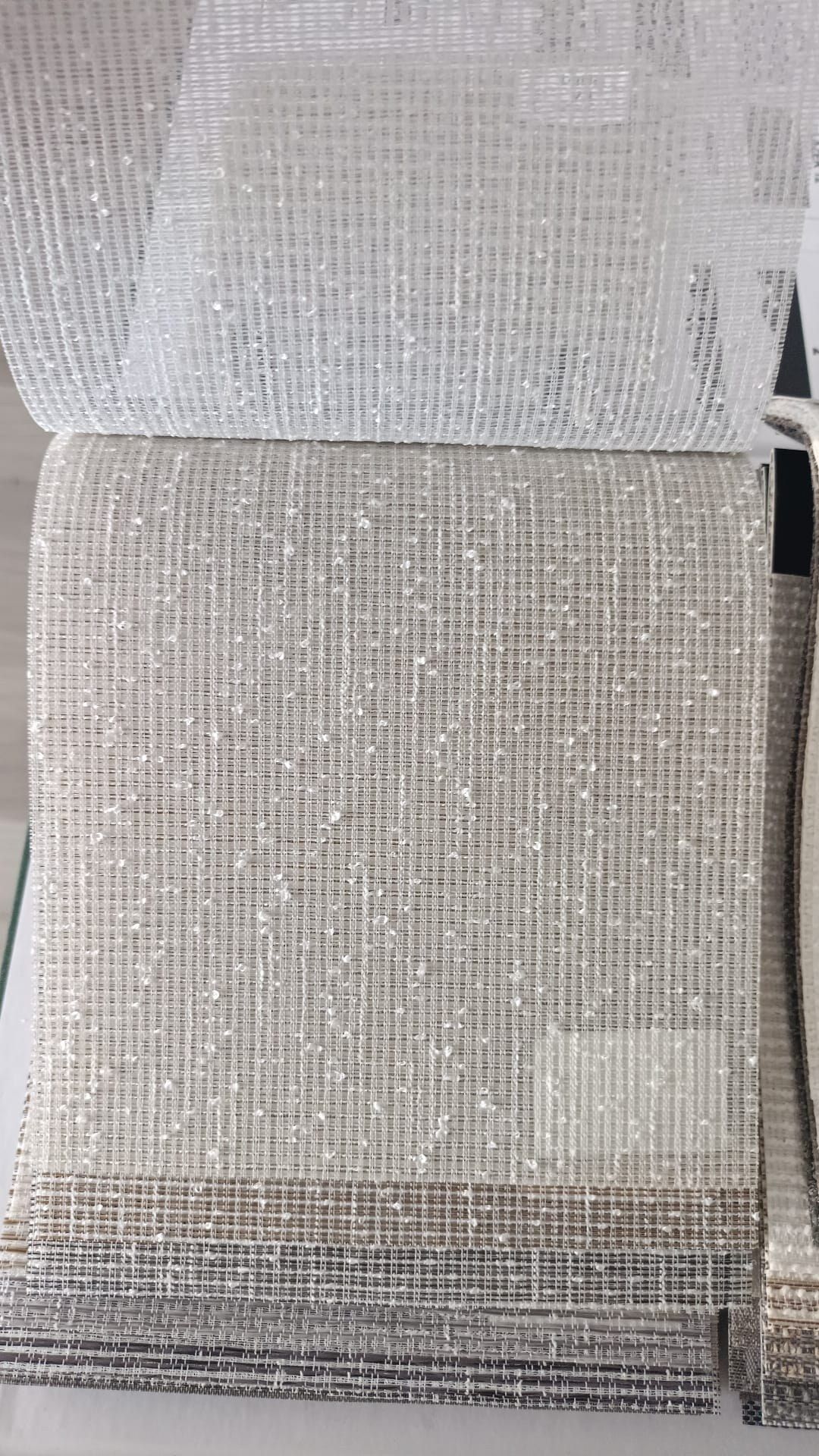
The mechanism stays the same – the fabric decides what the blind does for you:
- Plain: softens the light and gives a calm, modern look.
- Patterned: turns the window into part of the décor, popular in kitchens and children’s rooms.
- Screen: screen roller blinds filter the sun while you keep seeing outside during the day.
- Blackout: blackout blinds stop light entirely, ideal for bedrooms and hotel rooms.
If you would rather fine-tune the light hour by hour, look at two-layer zebra blinds; our zebra vs roller blinds guide weighs up both.
Fitting options
We can fit roller blinds inside the window recess, on the wall or on the ceiling. On uPVC windows a sash-mounted version moves together with the window when you tilt or open it. During the visit we check how your windows open and where the handles sit, then recommend the most practical fitting.
Easy to live with
Most roller fabrics resist dust and can be wiped with a damp cloth, which makes them a sensible option for kitchens and bathrooms too. For step-by-step tips, see how to clean blinds without damaging them. Holiday-home owners abroad can approve fabric choices from photos we send over WhatsApp.
Best suited for
- Children’s rooms and studies
- Kitchen and bathroom windows
- Offices and hotel rooms
Last updated: