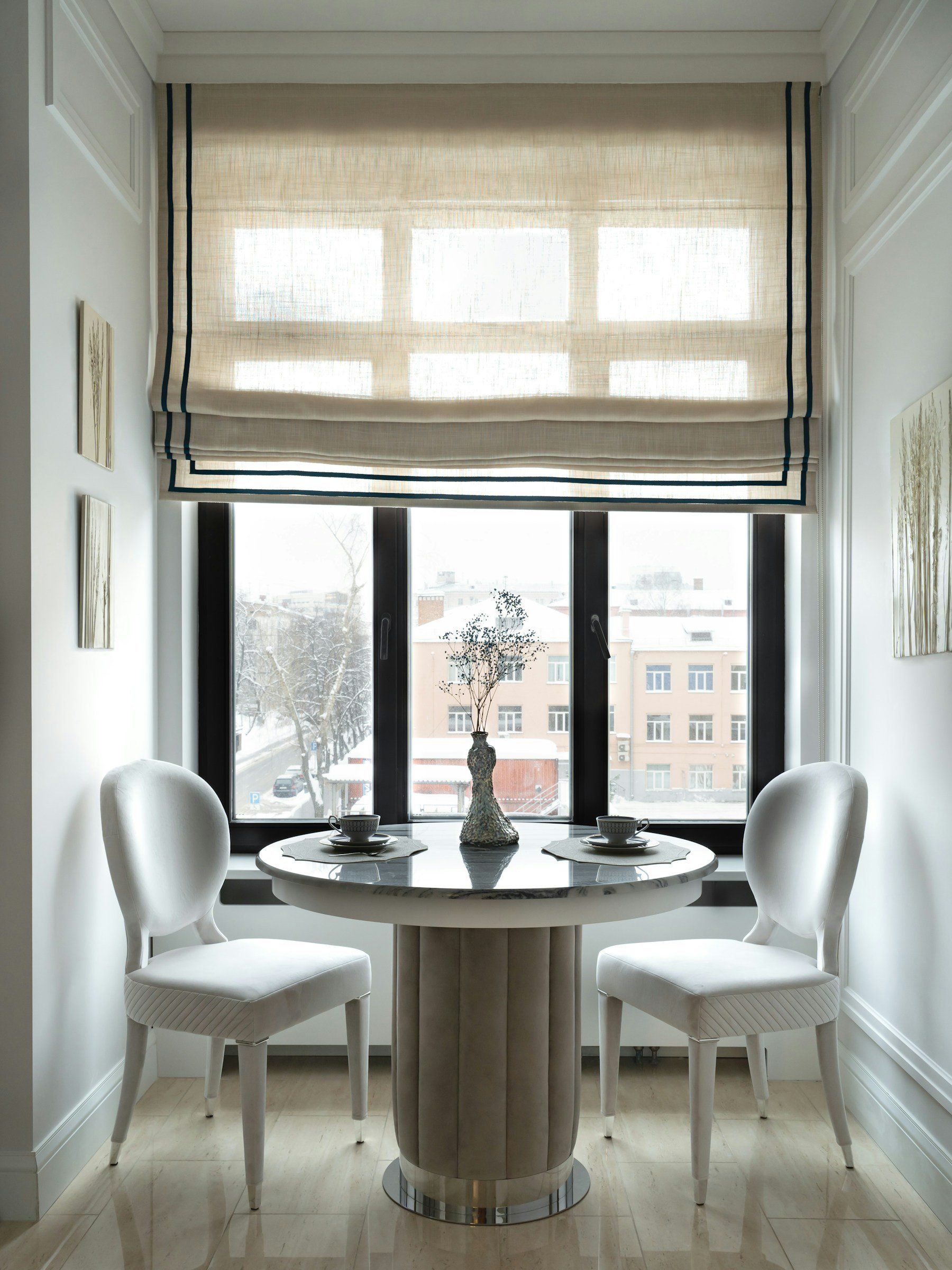
How a Roman blind works
Horizontal rods are sewn into the back of the fabric at regular intervals. When you pull the cord or chain, the bottom section lifts and settles on the one above, so the blind gathers into a tidy stack of folds at the top of the window. Lowered, it hangs as a flat panel of fabric.
A more decorative alternative
Because the fabric is visible and has volume, a Roman blind feels warmer and more “soft furnishing” than a plain roller blind. Patterned fabrics, linen textures or colours that pick up your cushions and upholstery really come into their own here.
Rooms where it works well
- Kitchens: no long curtains near the worktop – the fabric stays neatly at the top of the window.
- Bedrooms: with a blackout lining it keeps out early morning light while still looking soft; for total darkness compare our blackout blinds.
- Children’s rooms: cheerful prints that match the room’s theme.
It can be fitted inside the recess, above the frame or on the ceiling. We decide the best position at the free home visit, checking how the window opens and where the handles sit, and you choose the fabric from our samples there. If you are abroad, we can send photos to approve remotely. For a rough size beforehand, see how to measure windows for blinds and curtains. If adjusting light without raising the blind matters most, zebra blinds are more practical.
Best suited for
- Kitchen windows
- Bedrooms
- Children’s rooms
Last updated: